Tarot Card Death: Spiritual Meaning & Transformation
Discover the spiritual meaning of the Death tarot card. Learn about transformation, letting go, and the cycle of rebirth in your spiritual journey.
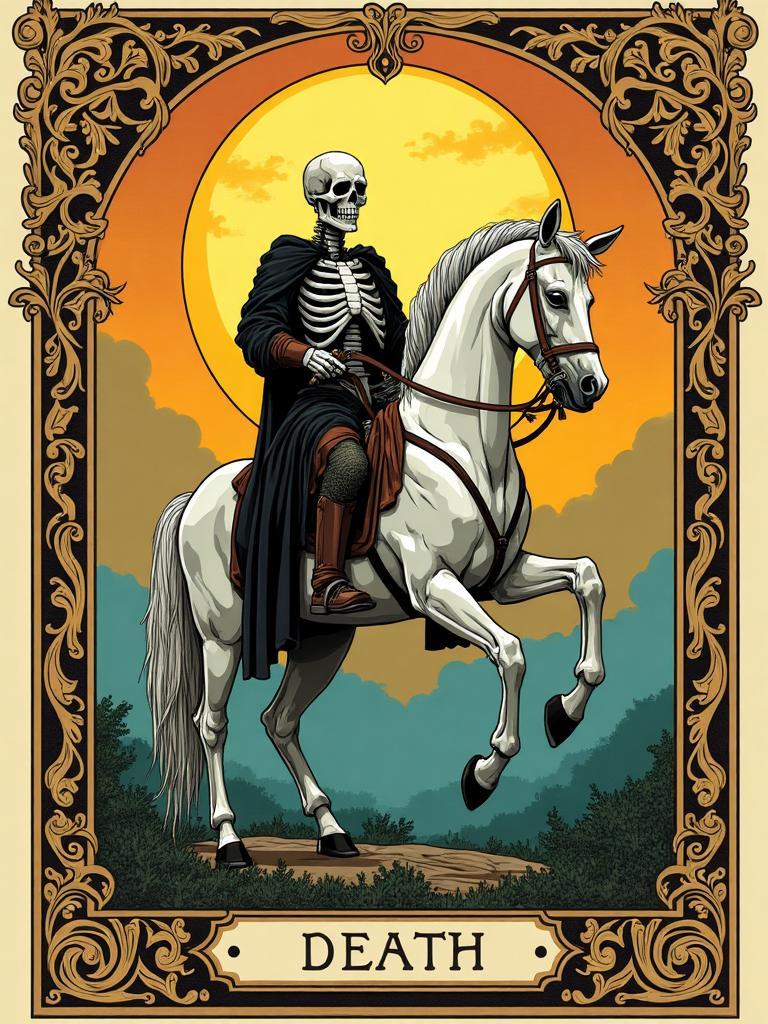
The Death Tarot Card: A Gateway to Spiritual Rebirth
Introduction to the Mystery of Death
In the realm of Tarot, few cards evoke as much immediate reaction as the Death card. For many beginners, it is a card of fear; however, for the seasoned practitioner and the spiritual seeker, it represents one of the most beautiful and necessary energies in the Major Arcana. Death is not about the end of life, but the end of a cycle. It is the cosmic vacuum cleaner that clears out the old to make space for the new. In a spiritual context, this card is the ultimate symbol of metamorphosis.
Card Overview: Symbolism and Essence
Numbered XIII, Death follows The Hanged Man—the stage of suspension and perspective. When we reach the Death card, we have moved from simply thinking about change to actually undergoing it. The imagery usually depicts a skeletal figure, sometimes armored, riding a white horse or standing over people of all social classes. This signifies that change is the great equalizer; it spares no one and is a natural law of the universe.
Key Attributes:
- Transformation: The core essence of the card.
- Ending: The closure of a door that no longer leads anywhere.
- New Beginning: The promise of a fresh start following the transition.
- Letting Go: The act of releasing attachments.
Spiritual Meaning (Upright): The Great Initiation
When the Death card appears upright in a spiritual reading, it signals a profound "ego death." This is a transformative period where your previous understanding of the self and the divine is shifting.
1. The Cycle of Rebirth
Spirituality is rarely a linear path; it is cyclical. The Death card represents the "Solve et Coagula" of alchemy—the process of breaking down (dissolving) so that something stronger can be built (coagulating). You may find that long-held beliefs, spiritual practices, or even your social circles no longer resonate with your higher self.
2. Radical Letting Go
To grow spiritually, we must shed our skin like a snake. The Death card asks: "What are you carrying that is already dead?" This could be a grudge, a limiting belief, or a spiritual identity that has become a mask. By embracing this ending, you allow the universe to fill the void with higher vibrations.
3. Transition into the Unknown
This card is a bridge. While the past is fading, the future is not yet fully formed. In spirituality, this is often called the "Dark Night of the Soul" or a liminal space. It requires trust that the universe has a plan for your evolution.
Spiritual Meaning (Reversed): Resistance to the Divine Flow
In the reversed position, the Death card suggests that you are standing at the threshold of change but are refusing to cross it.
1. Stagnation and Fear
Reversed, Death points to spiritual stagnation. You may be aware that a certain way of living or thinking is no longer serving your soul, yet you cling to it out of fear of the unknown. This resistance often causes more pain than the change itself, as you are fighting the natural current of your evolution.
2. Holding onto the Past
Are you reliving old spiritual experiences or trying to force a connection that has naturally withered? The reversed Death card is a gentle nudge from the universe that you cannot move forward if your hands are full of the past.
3. Delayed Transformation
The change is still coming—transformation is inevitable—but your resistance is making the process more difficult. The invitation here is to identify where you are being rigid and where you can soften.
Practical Tips for Working with the Death Card
If you have drawn the Death card or feel its energy in your life, here are ways to integrate its power:
- Space Clearing: Physically declutter your home to signal to your subconscious that you are ready for new energy.
- Grief Rituals: Acknowledge what is ending. It is okay to mourn a version of yourself that is leaving. Write a letter to your past self, thank them, and then safely burn it.
- Meditation on Impermanence: Spend time reflecting on the seasons. Just as autumn leads to winter and winter to spring, your current state is temporary.
Reflection Questions:
- What part of my identity feels heavy or outdated?
- What would I do if I wasn't afraid of losing my current status or comfort?
- What is trying to be born in my life right now?
- How can I be more graceful in the act of surrendering to change?
Conclusion: Harvesting the Wisdom of Change
The Death card is not an enemy; it is a liberator. In spirituality, it reminds us that we are eternal beings having a temporary human experience characterized by constant change. By embracing the energy of Death, we stop fearing the end of chapters and start looking forward to the wisdom that comes with rebirth. Whether upright or reversed, this card is a call to live authentically, to release the obsolete, and to step into the radiant potential of your next spiritual phase.
Questions for Self-Reflection
- What aspect of your current identity are you outgrowing, and what is preventing you from letting it go?
- If you were to clear away the 'clutter' of your past, what essential truth about your soul would remain?
- In what ways are you resisting a necessary ending that could actually lead to your greatest spiritual breakthrough?
- How can you honor the space between who you were and who you are becoming without rushing the process?
What This Card Does NOT Mean
- Does not mean a literal physical passing or biological death of yourself or a loved one.
- Does not mean a permanent or negative loss that leaves you empty; it signifies a transition into a new state of being.
- Does not mean a situation is beyond repair or 'doomed' without purpose; it indicates the natural conclusion of a cycle.
Typical Life Situations
- Undergoing a major career pivot after realizing your current profession no longer aligns with your core values.
- The final stages of a long-term relationship where both parties acknowledge they have grown in different directions.
- Breaking a deep-seated generational habit or addiction that has defined your family dynamic for years.
- A 'dark night of the soul' period where old beliefs crumble to make way for a more authentic spiritual practice.
- Moving to a completely new city or country, requiring the shedding of your old lifestyle and social circle.
Important Card Combinations
- The Fool: A powerful cycle of 'out with the old, in with the new.' This pair represents a total reset where the soul is purged of the past and immediately steps into a fresh, innocent beginning.
- The Tower: Sudden, inevitable, and transformative change. While Death is often a gradual fading out, The Tower accelerates the process, forcing a spiritual breakthrough through chaos.
- Judgement: The process of shedding the ego (Death) to hear one's higher calling (Judgement). This combination signifies a profound spiritual rebirth and the discovery of one's true purpose.
- The Star: Hope and healing following a painful ending. This synergy suggests that the 'death' of a situation is providing the necessary space for peace, inspiration, and spiritual renewal.