Seven of Pentacles: Making Decisions with Patience
Discover how the Seven of Pentacles guides your decision-making. Learn about long-term investment, assessment, and finding the right timing in tarot.
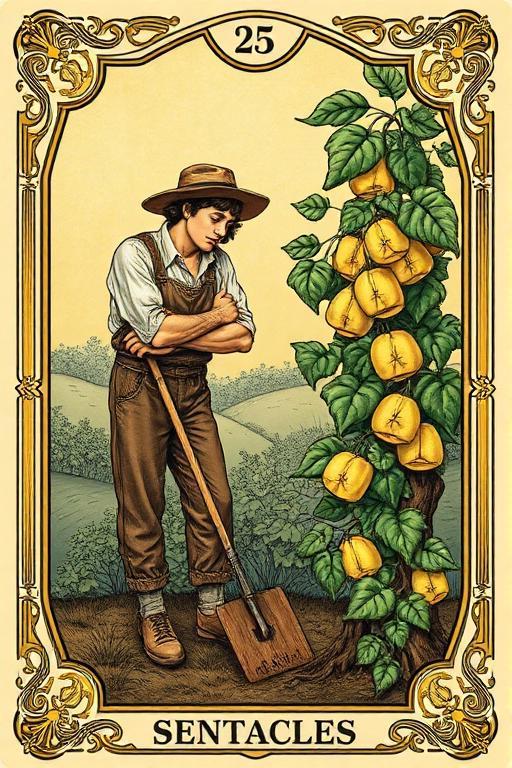
Seven of Pentacles: The Power of Patient Decision-Making
Introduction: The Art of the Pause
In our fast-paced world, we are often pressured to make decisions instantly. However, the Seven of Pentacles invites us into a different rhythm—one of observation, assessment, and strategic waiting. When this card appears in a reading focused on a decision, it signals that you are at a crossroads where your past efforts meet your future potential. It is not a card of frantic action, but a card of the "purposeful pause."
Understanding the Seven of Pentacles in the context of decision-making is about recognizing that not all growth is visible to the naked eye. Like a gardener standing over a patch of land, you have planted the seeds; now, you must decide whether to continue tending this crop, harvest what is there, or pivot to a new field entirely.
Card Overview: The Gardener's Wisdom
In the traditional Rider-Waite-Smith imagery, we see a figure leaning on a hoe, looking thoughtfully at a lush vine laden with seven pentacles. The harvest isn't quite ready, but the work has been done. The figure’s posture is one of contemplation rather than exhaustion.
This card represents the mid-point of a journey. You have moved past the initial spark of the Ace and the hard labor of the Three and Eight. The Seven is where the "Return on Investment" (ROI) is calculated. Its core keywords—Patience, Investment, Assessment, and Long-term—suggest that the decision at hand should not be made based on temporary emotions, but on the tangible results of your long-term efforts.
The Seven of Pentacles Upright: Deciding to Stay the Course
When the Seven of Pentacles appears upright in a decision-making context, the message is clear: Assess before you act.
Assessing Your Progress
If you are wondering whether to quit a project or double down, the upright Seven suggests that progress is being made, even if it feels slow. The decision here involves a careful audit of your energy. Ask yourself: Is the trajectory of my growth meeting my original goals? The "Upright" decision is usually one of refinement. You are being asked to look at the work you've put in and decide if the eventual harvest justifies the continued effort.
The Virtue of Patience
Often, this card appears when we are tempted to abandon a path because we don't see immediate rewards. In terms of a decision, the Seven of Pentacles advises against impulsive changes. It suggests that the best path forward is to wait for the "fruit to ripen." If you act too early, you may lose the full value of your investment. This is a "Yes" to staying the course, provided you use this time to evaluate your strategy.
The Seven of Pentacles Reversed: Re-evaluating Poor Investments
When reversed, the energy of the Seven of Pentacles shifts toward frustration and misalignment. In a decision context, this can be a warning sign.
Impatience and Fruitless Labor
The reversal often points to a decision born out of impatience. You might be tempted to cut corners or abandon a project just before it bears fruit. Conversely, it can indicate that you are "throwing good money after bad." This version of the card asks: Are you continuing this path just because you've already spent so much time on it? This is known as the Sunk Cost Fallacy.
Identifying Misalignment
In a decision-making spread, the Seven of Pentacles reversed suggests that the current investment—whether it’s a career choice, a relationship, or a financial venture—may not provide the return you desire. The decision here might be to stop, cut your losses, and redirect your energy elsewhere. It warns against staying in a situation that is draining you without offering any hope of a future harvest.
Practical Tips for Your Decision
To align your decision-making with the wisdom of the Seven of Pentacles, consider these practical steps:
- Conduct a Value Audit: List the time, money, and emotional energy you’ve invested. Is the predicted outcome worth this cost?
- Practice "Productive Waiting": If your decision isn't urgent, wait one lunar cycle (28 days). Observe the small changes that occur in that time.
- Check Your Timing: Are you rushing the process because of external pressure or internal anxiety? Realize that some things simply take time to grow.
Reflection Questions
- What does "success" look like at the end of this journey? Is that vision still what I want?
- Am I bored, or is the project truly failing?
- If I started today with nothing, would I choose to invest in this path again?
- Is my current impatience a sign of a bad investment, or just a lack of discipline?
Conclusion: The Wisdom of the Long View
The Seven of Pentacles reminds us that the best decisions are made from a place of grounded observation. Whether you choose to wait for the harvest or decide that the soil is no longer fertile, do so with a clear head and an honest heart. By taking the time to assess where you stand, you ensure that your next move is not just a reaction, but a deliberate step toward a sustainable and rewarding future. Trust the process, trust your labor, and most importantly, trust the timing of your life.
Questions for Self-Reflection
- Am I pausing to evaluate my progress because I am genuinely uncertain, or am I simply afraid of the next stage of commitment?
- If I continue on my current trajectory for another year, will the harvest be worth the energy I am currently investing?
- How can I distinguish between the need for patience and the need to pivot my strategy entirely?
What This Card Does NOT Mean
- It does not mean immediate failure or a dead end; rather, it signifies a necessary period of assessment before the final result.
- It does not mean passive waiting; it implies an active, conscious evaluation of the work already performed.
- It does not mean you should abandon your goals, but it does suggest that blind persistence without reflection is unwise.
Typical Life Situations
- Reaching a mid-career point and questioning if your current professional ladder is leaning against the right wall.
- Taking a 'sabbatical' or a brief hiatus from a long-term project to determine if the ROI (Return on Investment) justifies further effort.
- Evaluating a long-term relationship to decide if the shared values and growth align with your future life path.
- Reviewing a financial investment or savings plan to see if it is maturing at the expected rate or requires a change in portfolio.
Important Card Combinations
- The Fool: A powerful contrast between impulsive new beginnings and the need for patient evaluation; suggests a 'leap of faith' after careful review of past lessons.
- Wheel of Fortune: Indicates that your period of reflection is coinciding with a major karmic shift; the decision you make now will set a long-term cycle in motion.
- Judgement: A definitive crossroads where self-evaluation leads to a profound 'calling' or a final decision regarding your life's purpose.
- King of Cups: The transition from 'doing the work' to 'checking the work'; a cycle of mastery where you pause to ensure your craftsmanship meets your long-term standards.